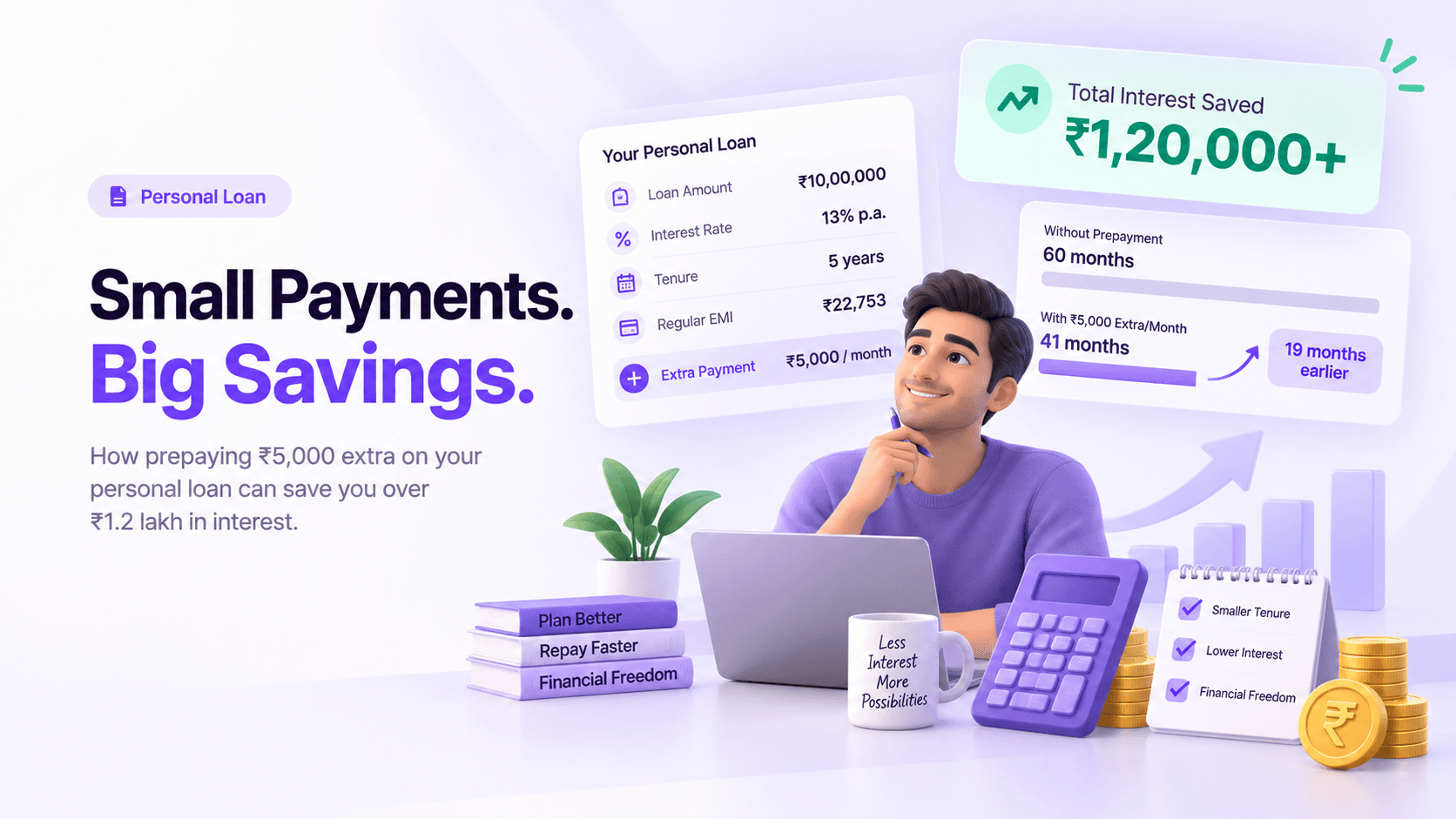
Why a Small Extra Payment Makes a Big Difference
Most borrowers think of their personal loan EMI as fixed — pay the same amount every month until the tenure ends. But personal loans in India are calculated on a reducing balance basis, which means every rupee you pay above your EMI goes directly toward cutting your outstanding principal. Less principal means less interest charged in every subsequent month, which compounds into massive savings over the life of the loan.
This is the single most underused strategy by salaried professionals repaying personal loans in India — and it costs almost nothing to start.
Key Takeaway: On a reducing-balance loan, prepaying early in the tenure saves far more interest than prepaying the same amount later, because more of your outstanding balance is still unpaid principal in the early years.
The Numbers: A Real Example
Let's take a common scenario — a salaried professional in a metro city with a mid-sized personal loan.
| Loan Detail | Value |
|---|---|
| Loan Amount | ₹10,00,000 |
| Interest Rate | 13% p.a. (reducing balance) |
| Original Tenure | 5 years (60 months) |
| Regular EMI | ₹22,753 |
| Extra Prepayment | ₹5,000/month |
Without prepayment:
- Total interest paid over 5 years: approximately ₹3,65,000
- Loan closes exactly on schedule in month 60
With an extra ₹5,000 paid every month along with the EMI:
- Loan closes in approximately month 41 — nearly 19 months early
- Total interest paid drops to roughly ₹2,40,000
- Total interest saved: over ₹1,20,000
The extra ₹5,000 a month feels small — roughly the cost of a few food-delivery orders or one skipped weekend outing — but because it attacks the principal directly, the compounding effect on interest is dramatic.
Why It Works: The Reducing Balance Mechanic
Every EMI you pay is split into two parts: interest (calculated on the outstanding principal) and principal repayment. In the early years of a loan, the interest component is much larger than the principal component. Any extra amount you pay is applied entirely to principal, which immediately shrinks the base on which next month's interest is calculated.
Rule of Thumb: The earlier in your tenure you prepay, the greater the interest saved — even a modest amount in year one outperforms a larger prepayment in year four.
Personal Loan vs. Loan Against Mutual Funds (LAMF): Which Suits Your Prepayment Strategy?
If you're weighing whether to take a fresh loan or restructure existing debt, it helps to compare how each product behaves when it comes to interest cost and flexibility.
| Feature | Personal Loan | Loan Against Mutual Funds (LAMF) |
|---|---|---|
| Interest Basis | Reducing balance on sanctioned amount | Interest charged only on amount utilized |
| Collateral | Unsecured | Mutual fund units under lien (units keep compounding) |
| Typical Interest Rate | 11%–24% p.a. | Often lower, since it's secured |
| Prepayment Charges | Usually nil to 2–4% for unsecured loans (check lender policy) | Typically no prepayment penalty; pay down anytime |
| Impact on Investments | None | Your equity/MF units continue compounding even while pledged |
For borrowers who already hold a mutual fund portfolio, a Loan Against Mutual Funds can sometimes be a more capital-efficient way to raise funds — you're not forced to redeem (and lose out on compounding or trigger capital gains tax), and you generally pay interest only on the amount you actually draw down.
How to Start Prepaying — Without Disrupting Your Budget
- Automate it. Set up a standing instruction so the extra amount is debited along with your EMI. This removes the temptation to skip a month.
- Use windfalls wisely. Direct at least 50% of any bonus, tax refund, or incentive payout toward prepayment instead of discretionary spending.
- Check for prepayment charges first. RBI guidelines exempt floating-rate loans to individual borrowers from foreclosure charges, but many personal loans carry fixed rates — always confirm your lender's prepayment/foreclosure policy before committing to a plan.
- Prepay in the first half of your tenure. As shown above, the earlier the prepayment, the higher the interest saved.
- Don't drain your emergency fund to prepay. Maintain at least 3–6 months of expenses in liquid savings before accelerating loan repayment — an unplanned dip into more debt to cover an emergency defeats the purpose.
Common Mistakes to Avoid
- Confusing "extra EMI" with "part-prepayment": Some lenders require you to specifically request a part-prepayment rather than just paying more via auto-debit. Confirm the process with your lender so the extra amount is actually adjusted against principal.
- Ignoring the fine print on charges: A 2–4% foreclosure fee on a large lump-sum prepayment can eat into your savings — run the math before making a big one-time payment.
- Stopping too early: Consistency matters more than the size of each individual prepayment. ₹2,000 a month for the full tenure often beats a single ₹50,000 payment made once.
Quick Self-Check: Is Prepayment Right for You?
Ask yourself:
- Do I have 3–6 months of expenses saved separately?
- Is my personal loan interest rate higher than the returns I'd realistically earn by investing that extra money instead?
- Does my lender charge minimal or no prepayment penalty?
If you answered yes to all three, even a modest, automated prepayment habit can meaningfully shorten your loan tenure and free up your monthly cash flow sooner.
Disclaimer: Loans and investments are subject to credit assessment and market conditions. Please read loan terms and scheme-related documents carefully before proceeding.